





Best Automatic Watches for Beginners, Chosen Well
The best automatic watches for beginners are rarely the loudest or most complicated. They are the pieces that make mechanical timekeeping feel intuitive: well proportioned on the wrist, clear at a glance, and built from materials that gain character rather than simply show wear. A first automatic watch should not be a temporary experiment. It should be a considered object you continue reaching for years from now.
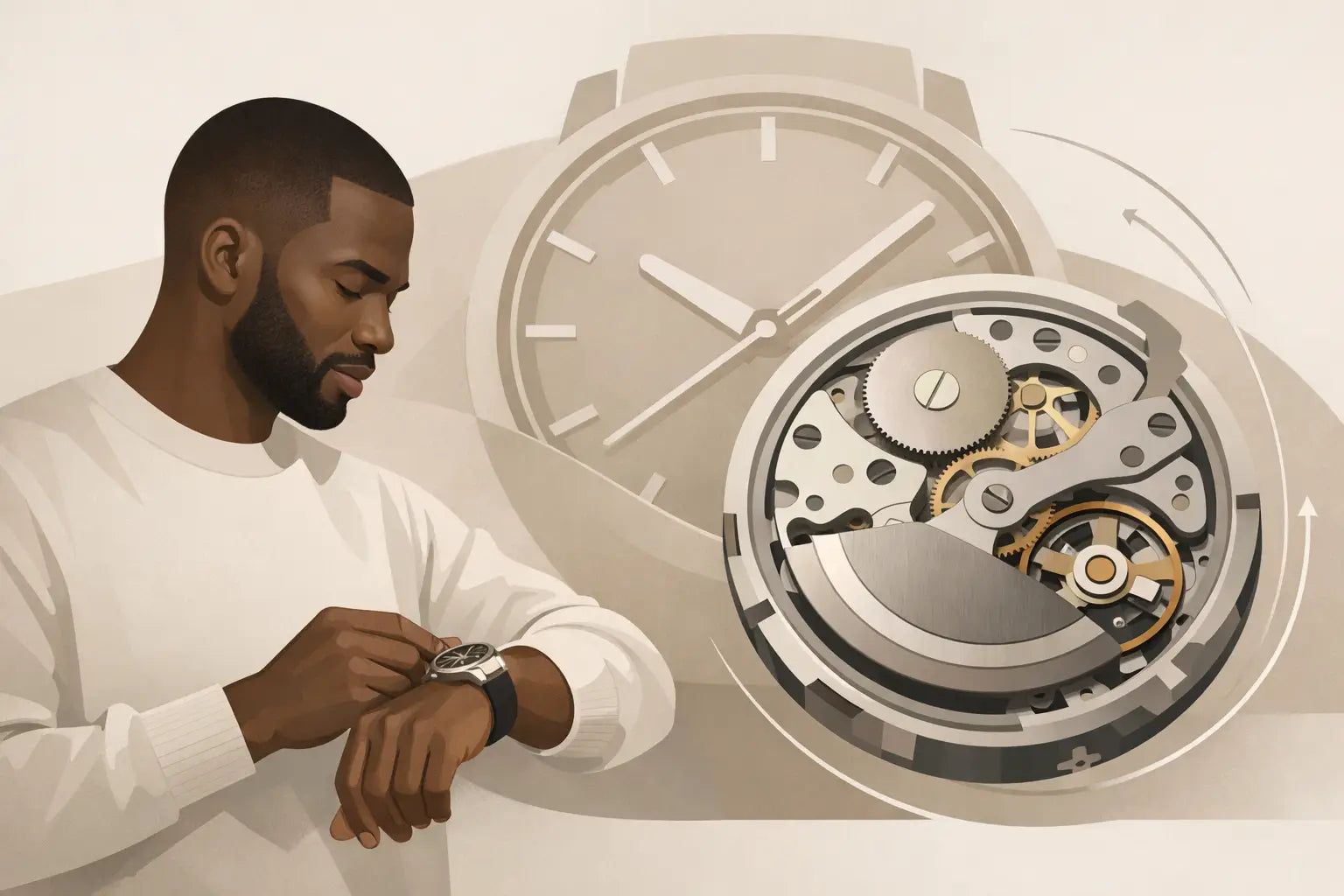
An automatic watch marks time through motion. As you wear it, a weighted rotor turns with the movement of your wrist, winding the mainspring that powers the watch. There is no battery to replace, but there is a small, living mechanism behind the dial. That distinction is the appeal. It asks for a little attention and offers a more tactile relationship with the passing hours.
Best Automatic Watches for Beginners Start With Restraint
For a first mechanical watch, simplicity is not a compromise. A restrained three-hand design with a date display, or without one, makes a stronger long-term proposition than a dial crowded with functions you may never use. The best designs establish their presence through proportion, finishing, and clarity rather than visual noise.
Look first at the relationship between case diameter, thickness, lug length, and dial opening. Diameter is only one measurement. A watch can sound modest on paper yet wear large if its lugs stretch across the wrist, while a broader case may sit elegantly if it is slim and compact. For many wrists, a case in the high-30mm to low-40mm range is a considered place to begin, but the shape and profile matter as much as the number.
The most versatile first watch tends to sit comfortably beneath a cuff, hold its own with a knit or T-shirt, and remain legible in ordinary light. It should belong to your wardrobe rather than announce itself over it. That is quiet luxury in practice: design with enough substance to reward attention, without requiring it.
Choose a Movement You Can Live With
A beginner does not need to become a watchmaker before buying an automatic watch. But understanding the movement's character helps establish the right expectations.
Mechanical movements are composed of tightly integrated gears, springs, levers, and jewels. Their accuracy is measured in seconds gained or lost per day, not in the near-perfect precision expected from a digital device. Small variation is normal. Position, temperature, activity level, and the state of wind can all influence performance.
For a first watch, prioritize a proven automatic movement with a reputation for dependable daily use and routine serviceability. Features such as hand-winding and hacking seconds are particularly useful. Hand-winding allows you to start the watch directly through the crown after it has been at rest. Hacking seconds stops the seconds hand when the crown is pulled out, making it easier to set the time precisely.
A transparent caseback can be a meaningful addition, especially for someone learning to appreciate mechanics. It offers a view of the rotor and movement architecture without changing how the watch functions. Still, an exhibition back is not required. A solid caseback can be equally purposeful, particularly when it contributes to a slimmer or more considered case design.
Materials Define How a Watch Ages
The materials surrounding the movement deserve the same scrutiny as the mechanism itself. Stainless steel remains a strong foundation because it resists daily wear, takes finishing well, and can move comfortably between professional and informal settings. Pay attention to the quality of brushing and polishing. Clean transitions between finishes reveal care in the casework.
The crystal is another practical marker. Sapphire crystal is valued for its exceptional resistance to scratches, making it well suited to a watch intended for frequent wear. It is not invulnerable, but it will retain its clarity through ordinary use better than softer alternatives.
Straps shape the experience as much as the case. A vegetable-tanned leather strap develops a deeper, more individual surface over time, with a patina tied to how and where it is worn. It is especially compelling for those who appreciate material honesty. Leather does require care: keep it away from repeated soaking, allow it to dry naturally, and recognize that a well-worn strap is meant to be replaced eventually.
A steel bracelet offers a different kind of durability and versatility. Before committing, assess its articulation, clasp, and adjustability. A bracelet that fits imperfectly can make an otherwise excellent watch feel neglected. The same is true of a leather strap with poor finishing at the edges. These are small details, but daily objects are defined by small details.
Water Resistance Is About Real Life
Water-resistance ratings should be read as a practical boundary, not a challenge. A watch that can manage rain and handwashing suits many owners perfectly. If swimming, travel, or regular outdoor activity is part of your life, choose a watch designed for that level of exposure and use it accordingly.
Crowns should always be checked before water contact. If a watch has a screw-down crown, it must be fully secured. Leather straps and water are also a poor pairing, regardless of the watch head's rating. Mechanical watches reward this kind of modest care. They are durable objects, but they are not disposable ones.
Find the Design Language You Will Actually Wear
A first automatic watch often falls into one of four useful design directions:
- A restrained dress watch, defined by a slim profile, clean indices, and a leather strap.
- A versatile everyday watch, usually in steel, with clear dial furniture and enough water resistance for regular use.
- A field-inspired watch, appreciated for high legibility, practical proportions, and understated utility.
- A sport-oriented watch, with a stronger case architecture and a bracelet or durable strap for active wear.
Consider color with the same restraint. Black, silver, charcoal, deep blue, and warm cream dials tend to remain adaptable across seasons and occasions. More unusual colors can be compelling, particularly in limited releases, but they should feel connected to your personal wardrobe rather than purchased for novelty.
For a design-led starting point, the NCMPRBL Ascend Automatic collection speaks to this balance of mechanical interest and composed daily wear. The value of an intentional timepiece is not that it attempts to perform every role. It is that its proportions, materials, and purpose remain convincing after the initial excitement has passed.
Wear It Enough to Understand It
An automatic watch becomes more satisfying once it enters a routine. If worn regularly, it will generally remain wound through ordinary wrist movement. If it stops after a few days off the wrist, that is normal. Reset the time, add a few turns of the crown if the movement permits hand-winding, and wear it again.
Some owners eventually choose a watch winder, particularly for watches with complex calendars. For a straightforward first automatic, it is usually unnecessary. Letting the watch rest is entirely appropriate. The brief ritual of setting it again can be part of the pleasure.
Mechanical watches also need periodic professional service. The timing depends on the movement, its condition, and the manufacturer's guidance, but service should be viewed as ownership maintenance rather than a defect. Oils age, seals require inspection, and moving components benefit from knowledgeable care. This is part of what separates a modern heirloom from a short-lived accessory.
Avoid setting a date near the period when many mechanical movements are beginning their automatic date change, commonly late in the evening. Consult the watch's instructions, move the hands beyond that interval, then set the date. It is a small habit that protects the mechanism's calendar components.
The Better First Purchase Is the One With Staying Power
Investment value in a first automatic watch should be understood personally before it is understood financially. A watch earns its place when it is worn often, maintained properly, and remains visually relevant long after a trend has moved on. Its value grows through continuity: the meetings, trips, milestones, and ordinary days it quietly records.
Choose the piece that feels settled on the wrist, not merely impressive in a product image. A well-made automatic watch should invite closer inspection, then disappear into the rhythm of your life. That is often the clearest sign that you chose well.