




Automatic vs Quartz Watches for Your Life
A watch changes the character of a morning routine. One asks for a glance before leaving the house; another asks to be wound, set, and worn with a little more attention. The choice between automatic vs quartz watches is not simply a question of precision. It is a question of what you expect an object to contribute to your daily life.
For some, the appeal lies in mechanical movement: a small architecture of springs, gears, and controlled energy working beneath the dial. For others, a quartz watch offers a clean, exacting companion that keeps pace without ceremony. Both have a place in a considered wardrobe. The better choice depends on your habits, your eye for craft, and the kind of relationship you want with time.
Automatic vs Quartz Watches: The Fundamental Difference
An automatic watch is powered by motion. Inside its case, a weighted rotor turns as the wearer moves, winding a mainspring that stores energy. That energy travels through a series of mechanical components before reaching the balance wheel, which regulates the watch's rate. The result is a self-winding movement with no battery at its center.
Quartz watches operate differently. A battery sends an electrical current through a quartz crystal, causing it to vibrate at a remarkably consistent frequency. Those vibrations regulate the movement and drive the hands forward in measured increments. It is a concise piece of engineering, prized for dependable accuracy and minimal intervention.
The distinction is easy to see on many dials. A quartz second hand commonly advances in individual one-second steps. On an automatic watch, it usually moves in a softer, more frequent sweep. Neither is inherently superior. They represent two different schools of watchmaking: one rooted in mechanical continuity, the other in electronic precision.
Why Automatic Watches Continue to Matter
An automatic watch has a tactile quality that is difficult to reduce to a specification sheet. Its movement is alive with motion, however discreetly. Wearing one connects the object to the body: the rotor responds to your stride, the mainspring gathers energy through the course of a day, and the watch becomes part of a personal rhythm.
This is where craftsmanship carries real weight. A mechanical movement is composed of parts designed to work together over years, with periodic care. Its value is not limited to immediate accuracy. It rests in the intelligence of the mechanism, the pleasure of observing it, and the fact that it can be maintained rather than simply replaced.
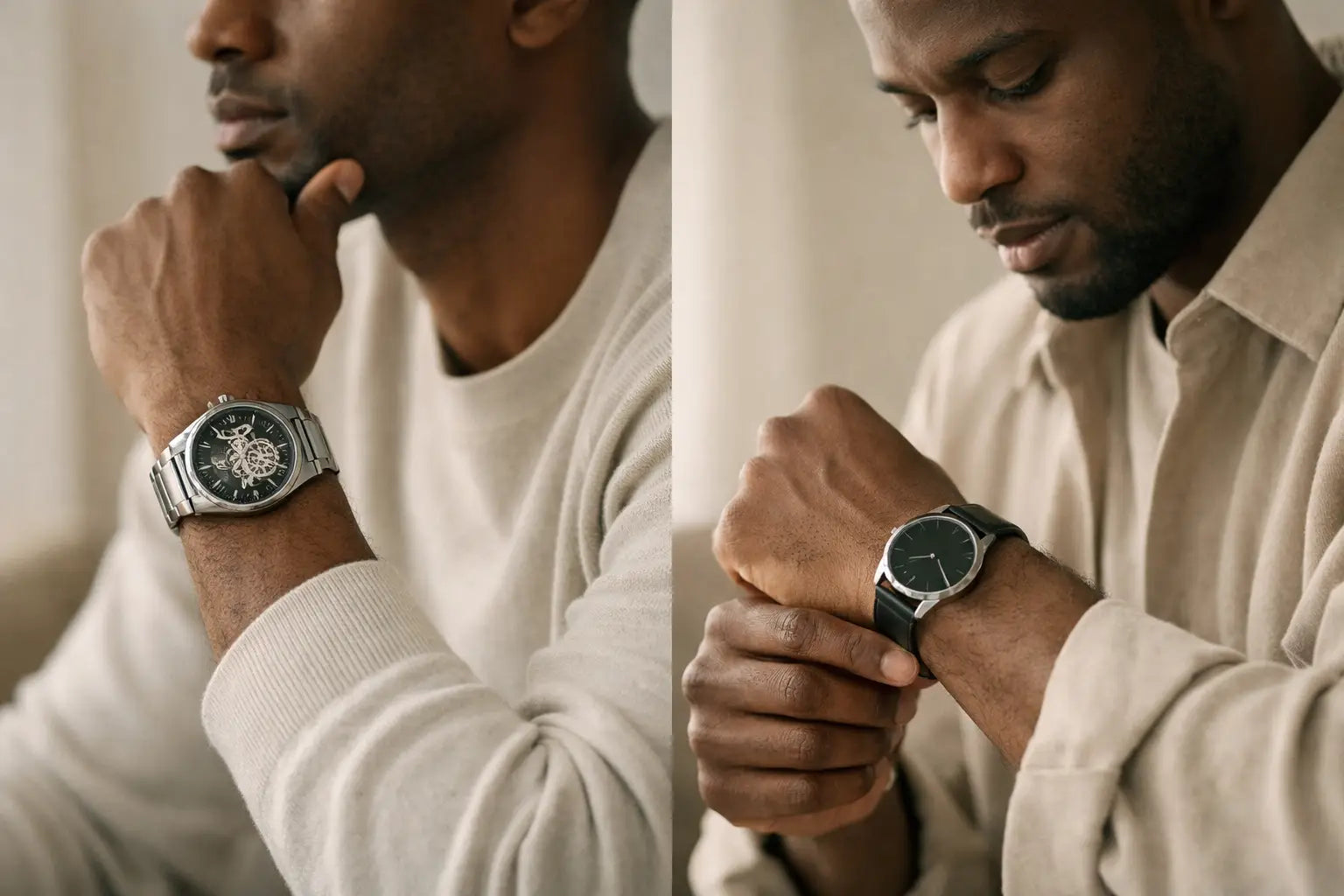
For collectors and design-minded wearers, automatic watches also carry a particular visual appeal. An exhibition caseback may reveal the rotor and bridges in motion, while a well-proportioned case gives that mechanical depth a restrained exterior. The finest examples do not rely on spectacle. Their details reward closer attention: a balanced dial, deliberate finishing, a crown that feels precise between the fingers, or a leather strap that gains character with wear.
The Ascend Automatic collection reflects this perspective. Its appeal is not novelty, but the enduring relevance of an intentional timepiece made to become familiar over time. Like vegetable-tanned leather or Japanese titanium, a well-made mechanical watch often becomes more personal through use rather than less so.
Automatic ownership does require participation. Most models have a power reserve, commonly lasting a day or two after they leave the wrist. If you rotate among several watches, you may need to reset the time and date before wearing one again. Mechanical watches are also less precise than quartz watches in daily timekeeping. A variation of several seconds per day is normal, depending on the movement and conditions.
For many, these are not drawbacks. They are part of the ritual. But they should be understood clearly before choosing a mechanical piece as an everyday watch.
The Case for Quartz Watches
Quartz watches are often described as practical, which is true but incomplete. At their best, they express a different kind of discipline: lean engineering, reliable performance, and a design language free to focus on proportion and material.
A quartz movement is typically far more accurate than an automatic movement. Many quartz watches deviate only seconds per month, rather than seconds per day. They are ready when needed, whether they have been worn all week or left in a drawer since the previous season. For a professional who moves between meetings, airports, studios, and dinners, that consistency can be quietly valuable.
They are also generally easier to live with. A battery replacement is required periodically, but there is no need to wind the watch through regular wear. Quartz movements tend to be more resistant to the small disruptions of a fast-moving schedule, and their slim construction can allow for a notably refined profile under a cuff.
That does not make quartz impersonal. A well-designed quartz watch can be a lasting style staple, especially when its case, dial, bracelet, and finishing are given the same level of consideration as the movement inside. The movement determines how a watch keeps time. It does not, by itself, determine whether a watch has presence.
Maintenance, Durability, and Long-Term Ownership
The most useful comparison between automatic vs quartz watches begins after the purchase. Each asks for care, though in different forms.
Automatic watches benefit from periodic professional service. Oils within the movement eventually need attention, seals should be checked, and the movement may require regulation to keep it operating as intended. Service intervals vary by watch and use, but the principle is straightforward: a mechanical watch is a serviceable machine. Proper maintenance can extend its life across decades.
Quartz watches need less frequent mechanical attention, but battery changes should be handled responsibly. An exhausted battery left inside a watch can leak and damage the movement. Water resistance should also be checked over time, particularly if the watch is exposed to rain, travel, or regular handwashing.
Durability depends on more than the movement. Case material, crystal, crown construction, water resistance, and strap quality all matter. Sapphire crystal offers strong resistance to everyday scratches. Stainless steel remains a proven choice for wearability. Vegetable-tanned leather rewards sensible care, developing a richer surface over time while remaining best kept away from prolonged moisture.
Neither type should be treated as indestructible. Mechanical watches are especially sensitive to severe shocks, while quartz watches can still suffer from impact, moisture intrusion, or neglected batteries. A watch intended as a modern heirloom deserves a little attention, regardless of what powers it.
Choosing by Lifestyle, Not Assumption
Choose an automatic watch if you are drawn to process, material history, and the quiet satisfaction of a mechanism that works because it has been carefully assembled. It suits someone who sees a watch as more than a time display: an object of daily use with a tangible connection to craft. It is especially compelling as a personal marker, a graduation piece, a first significant watch, or a collection anchor worn often enough to become part of one's signature.
Choose quartz if precision and ease are your first priorities. It makes sense for a watch that needs to be ready without adjustment, for a slimmer formal profile, or for the person who values design but does not want another ritual on the calendar. Quartz can be the thoughtful choice, not the lesser one.
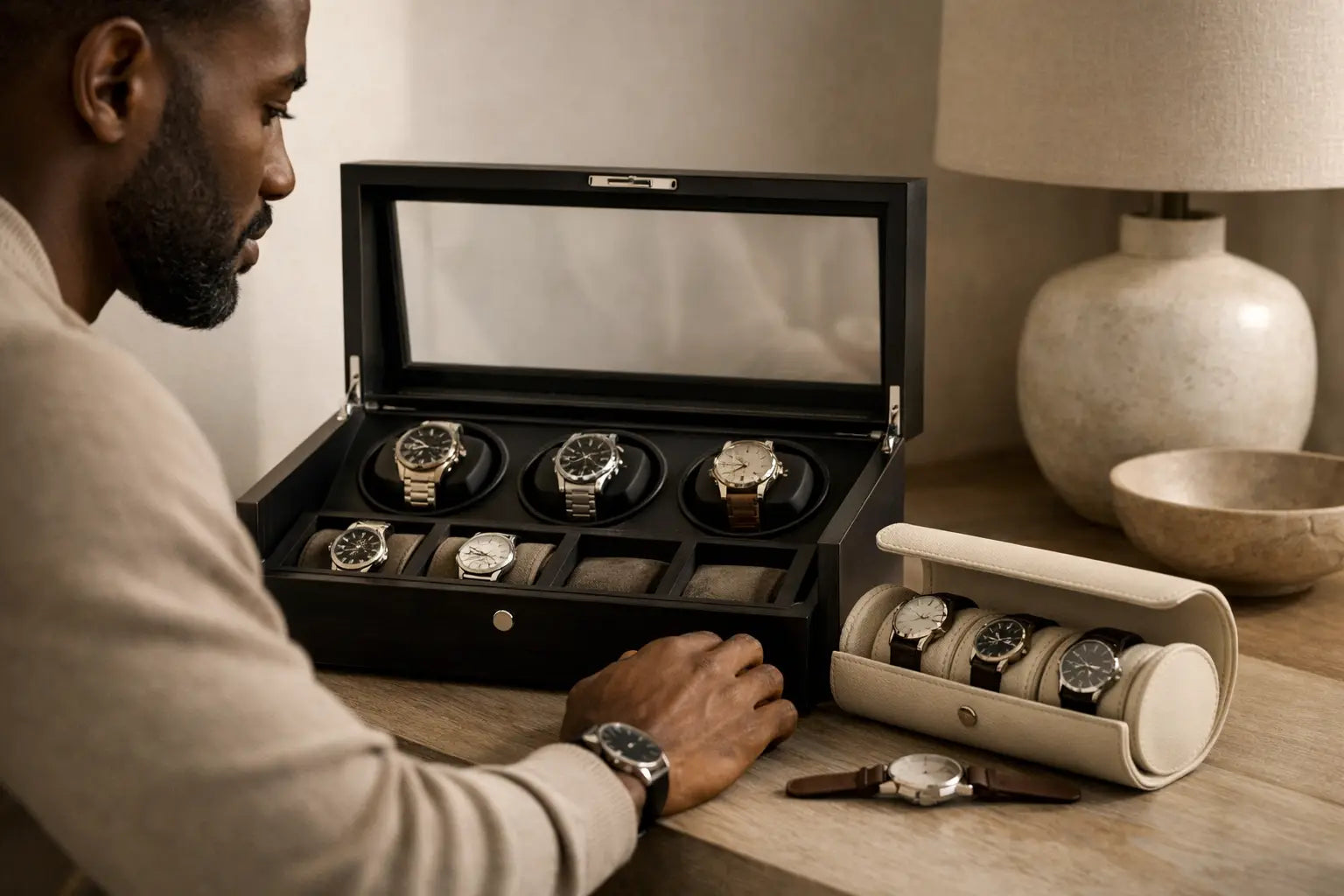
Many considered collections include both. An automatic may be reserved for weekends, client dinners, and the occasions when the act of wearing a watch is part of the experience. A quartz piece may handle travel, busy workdays, and the practical demands of a tightly organized schedule. This is not indecision. It is using each movement for what it does best.
What Makes a Watch Worth Keeping
Investment value in watches is often misunderstood. A watch need not become a speculative object to justify its place in a wardrobe. Its more durable value may be measured in years of wear, the integrity of its materials, the relevance of its design, and its ability to remain appropriate as personal style becomes more defined.
Look for proportion before novelty. Consider whether the case will feel right with tailoring and knitwear alike, whether the dial has enough restraint to stay legible, and whether the strap or bracelet can withstand regular use with grace. Limited releases can add distinction, but scarcity alone is not substance. Construction, design clarity, and a movement suited to your routine matter more.
The right watch is the one you reach for without needing to explain it. Choose the automatic if its mechanical cadence feels worth the care. Choose quartz if precision gives you freedom. Either can become part of a life lived with intention.