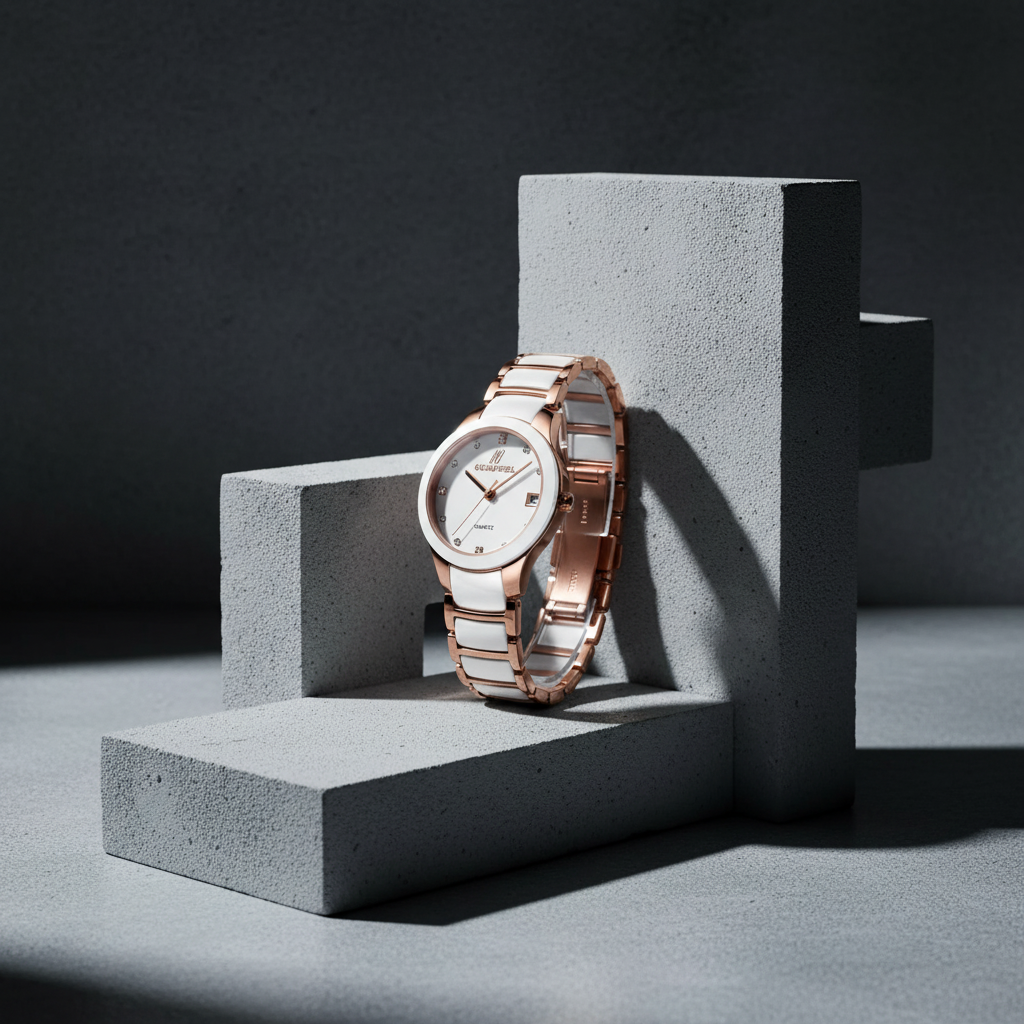
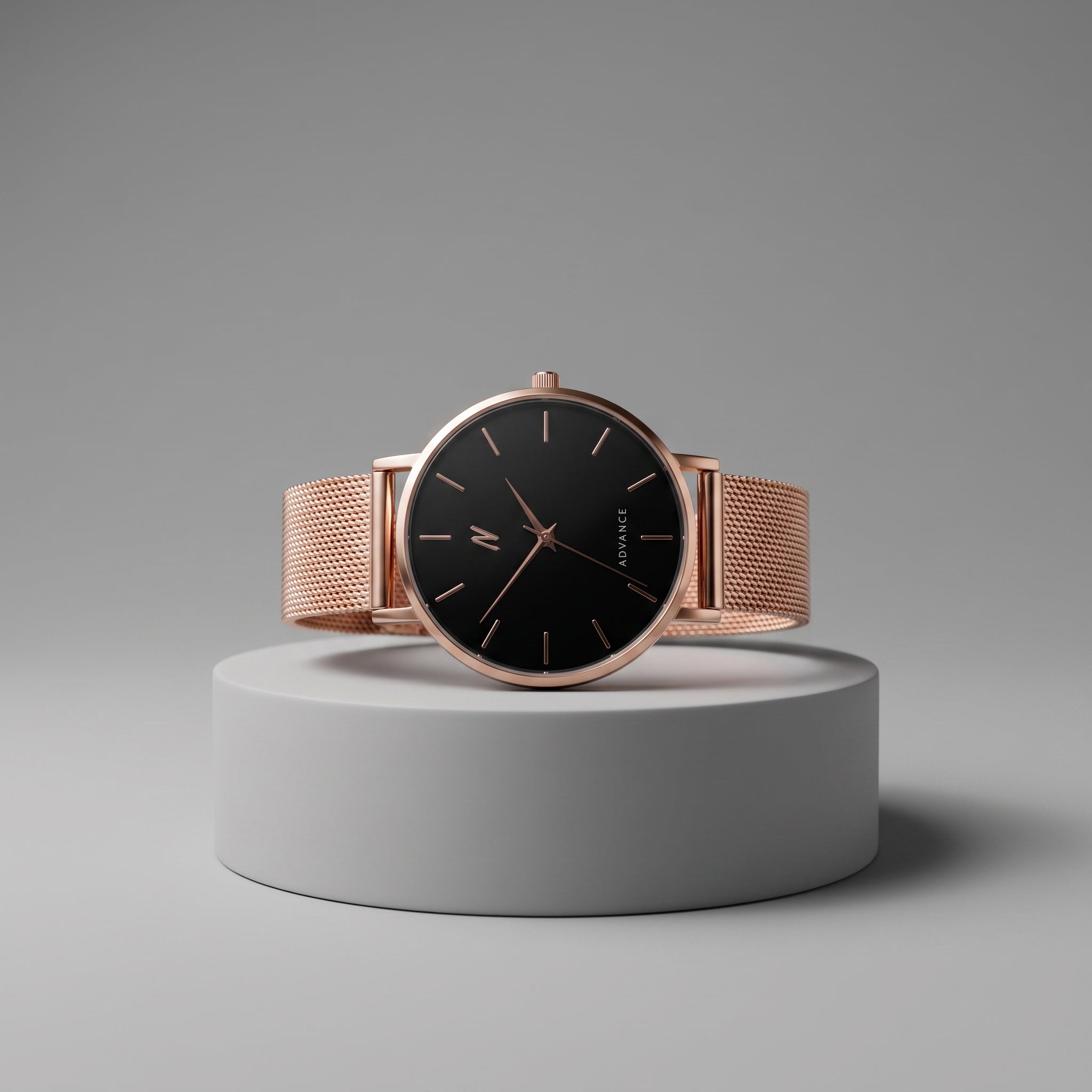






An Automatic Timepiece Review That Lasts
A proper automatic timepiece review begins after the first glance. The dial may establish a mood, and the case may sit convincingly on the wrist, but the lasting character of a mechanical watch is revealed in quieter details: the movement’s behavior, the integrity of its materials, and whether its design will remain persuasive after years of wear.
For those building a considered wardrobe, an automatic watch occupies a particular place. It is not a seasonal accent. It is an object that records routine: the morning commute, a long flight, a dinner that became memorable, the ordinary days that acquire meaning in retrospect. Its appeal is partly technical, but it is also deeply personal. A well-chosen automatic timepiece becomes familiar through use rather than diminished by it.
What an Automatic Movement Brings to the Wrist
An automatic movement is powered by motion. As the wearer moves, a weighted rotor turns and winds the mainspring, storing energy that is released gradually to drive the watch. There is no battery to replace, which gives the mechanism a distinct rhythm and a useful independence from disposable power.
That description is simple. The experience is more nuanced. A mechanical watch asks for a small degree of participation. If it is worn regularly, it will usually remain running. If it sits for several days, it may stop and need to be reset. This is not a failure of convenience so much as the nature of the object. The watch rewards attention without demanding ceremony.
Accuracy also deserves perspective. Even a well-regulated automatic movement can gain or lose several seconds a day, depending on the movement, how it is worn, and its resting position overnight. Quartz remains the more exact technology. Mechanical watchmaking offers something else: a compact, serviceable engine working through springs, gears, and controlled friction beneath the dial.
For many collectors, that visible or implied mechanical life is the point. The seconds hand moves in a measured sweep rather than a single tick. A display caseback, where present, can turn routine timekeeping into an occasion to notice finishing, rotor motion, and proportion.
An Automatic Timepiece Review Should Start With Proportion
Movement alone cannot make a watch successful. A beautifully engineered caliber in an awkward case is still an awkward watch. The first practical question is proportion, particularly for a piece intended for frequent wear.
Case diameter matters, but it is only one measure. Lug-to-lug length often determines whether a watch sits inside the wrist or stretches beyond it. Case thickness affects how it works under a cuff. The curve of the lugs, the placement of the crown, and the balance between dial opening and bezel width can change the entire impression of a watch with the same stated dimensions.
A restrained watch rarely needs to announce its size. For professional settings and travel, a case that wears with composure tends to have a longer life than one built around immediate impact. This does not mean every watch should be small or thin. It means the scale should have a reason. A substantial case can feel correct when its geometry is disciplined and its thickness reflects the movement within.
Dial design works by the same standard. Legibility should not be sacrificed for ornament, yet legibility need not look purely utilitarian. Applied markers, a carefully proportioned date window, and hands that clearly separate hour from minute all make daily use more satisfying. The finest restrained dials leave visual room to breathe. Their details emerge gradually.
Materials Are Part of the Long-Term Calculation
The material of a watch case is not merely a specification. It determines weight, aging, resilience, and the way a piece settles into a personal collection.
Stainless steel remains a strong choice for daily wear because it is durable, familiar to service, and capable of taking on a soft patina of use. Titanium shifts the experience. It is notably light on the wrist and highly resistant to corrosion, making it especially compelling for someone who wears a watch through travel, work, and weekends without wanting to feel its presence constantly.
Material heritage matters across the NCMPRBL world. Japanese titanium brings a particular precision and lightness to eyewear, while Italian Mazzucchelli acetate offers depth, color, and a finish that improves the longer it is handled. The same philosophy applies to intentional timepieces: materials should be selected for their character in use, not simply for the appeal of a product page.
Straps deserve equal scrutiny. Vegetable-tanned leather develops variation from warmth, light, and contact with the skin. That evolution is attractive when the leather is well made, though it requires sensible care around water and heavy perspiration. A bracelet is often more adaptable for frequent exposure to the elements, while leather can give a watch a quieter, more considered presence. Neither is universally better. The right choice depends on how and where the watch will be worn.
Crystal is another useful distinction. Sapphire is valued for its resistance to scratching and is well suited to an everyday watch expected to remain clear over time. Mineral crystal may be appropriate in certain designs, but it generally asks for more care. These decisions are rarely visible from across a room. They are exactly the details that separate short-term appeal from durable ownership.
Serviceability Is the Measure Most Buyers Miss
A mechanical watch is designed to be maintained. Its oils age, its seals eventually need attention, and its accuracy may benefit from regulation. This is part of the ownership model, not an inconvenience hidden behind the romance of mechanical engineering.
Before choosing a piece, consider whether its movement is from a widely supported family, whether replacement parts can be reasonably sourced, and whether the case construction allows competent watchmakers to service it without unnecessary difficulty. An automatic watch earns its place as a modern heirloom when it can continue to be cared for rather than treated as a sealed object with a fixed lifespan.
Water resistance should be read honestly. A rating suitable for incidental splashes is not necessarily an invitation to swim. A watch intended for regular water use should have the appropriate rating and should be pressure-tested periodically, particularly after battery-free mechanical ownership has encouraged the assumption that no upkeep is needed. Crowns should be fully secured, and leather straps should stay clear of extended water exposure.
The movement’s power reserve matters, too, but should not be exaggerated. A longer reserve offers flexibility if a watch rotates among several pieces. A more modest reserve is entirely workable for a watch worn most days. For a collector who alternates between watches, a watch winder can keep select pieces running, though it should be used thoughtfully and matched to the movement’s winding direction and settings.
Value Is Built Through Use, Not Speculation
The word investment can be misleading in watch culture. No purchase should be approached with an assumed financial return. Market interest changes, limited releases vary in long-term demand, and condition has a material effect on collectibility.
There is, however, a more durable idea of value. A watch holds personal value when its construction supports years of use, when its design resists trend fatigue, and when it can be serviced instead of replaced. Limited releases can add a sense of distinction, but scarcity alone is not enough. The piece must still have proportion, material integrity, and a clear point of view.
This is where quiet luxury has an advantage. A watch that relies on overt branding may be tied closely to a particular moment. A watch with disciplined finishing, balanced typography, and thoughtful mechanics remains relevant because it does not exhaust its own visual language. It becomes part of a signature rather than a statement that needs explaining.
How to Judge a Watch Before It Becomes Yours
Spend time with the watch in the context of your actual life. Notice whether the crown is easy to use, whether the markers remain readable in changing light, and whether the clasp or buckle feels secure without becoming fussy. Consider the watch beside the tailoring, knitwear, eyewear, and outerwear you already reach for. The strongest choice will not compete with those pieces. It will clarify them.
A thoughtful automatic watch also benefits from a thoughtful home. Store it away from magnets, excessive humidity, and abrupt temperature changes. Wipe down the case and bracelet with a soft cloth after regular wear. If it has a leather strap, allow the strap time to dry naturally between wears. Small habits preserve both the object and the pleasure of owning it.
Choose the watch whose details continue to reward attention after the novelty has passed. The best automatic timepieces do not ask to be noticed by everyone in the room. They keep time beside you, acquire a record of your life, and become more convincing with each year you decide to wear them.