





Optical Frames That Hold Their Place Over Time
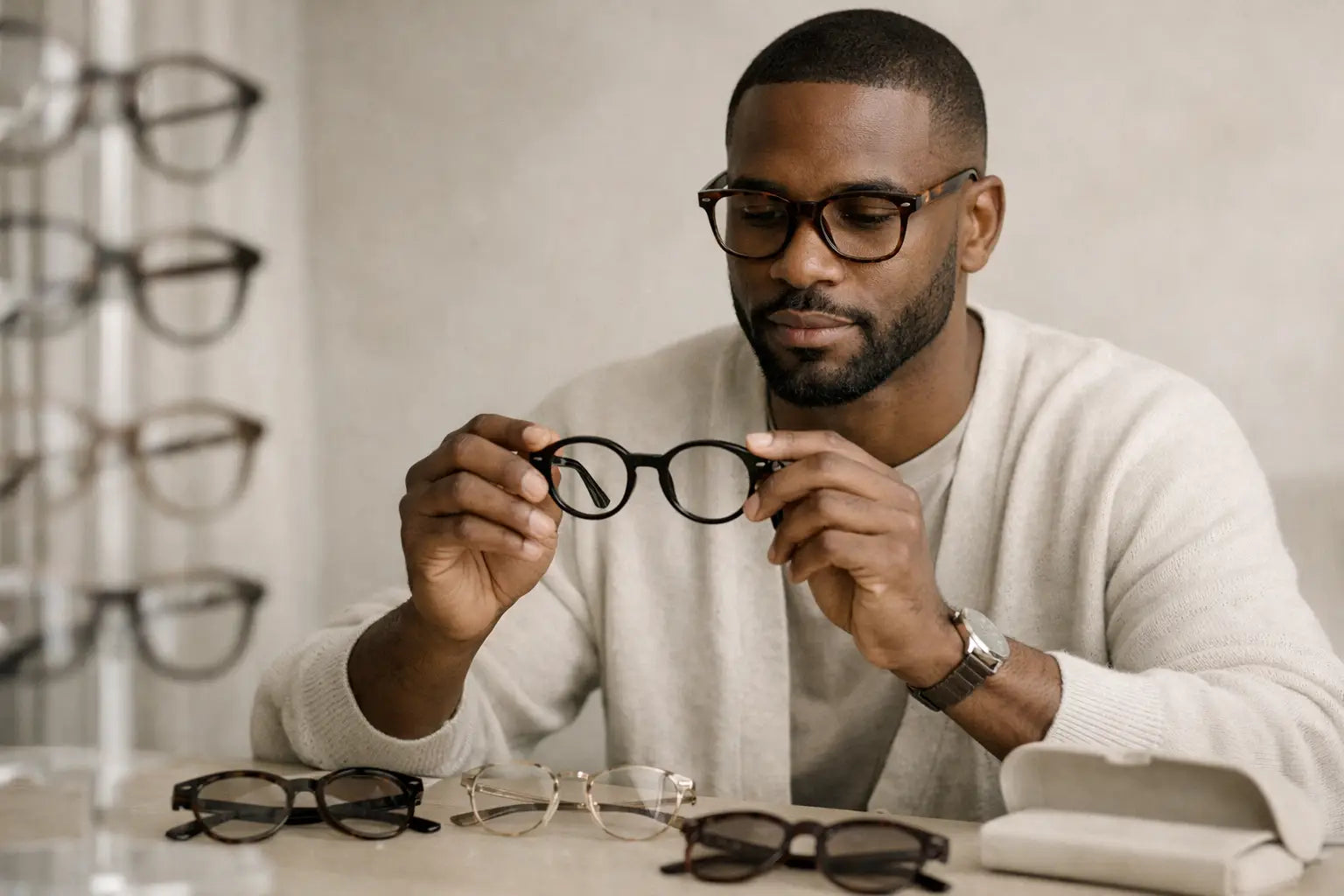
A pair of optical frames is among the few objects worn close enough to influence every interaction. They sit at the center of a face, enter the frame of every meeting, and become part of the visual language people associate with you. That proximity asks more of them than novelty. The right pair should feel composed in the morning, credible at work, and natural years after the first fitting.
Quiet luxury in eyewear is not a matter of removing every detail. It is the discipline of making each detail count: the line of a brow, the weight at the bridge, the finish of an acetate edge, the hinge that continues to close cleanly after daily use. Optical frames earn their place through proportion, material integrity, and an ability to accommodate the life lived behind the lenses.
Optical Frames Are a Matter of Proportion
People often begin with face shape, and it is a useful starting point. A soft, round face may welcome the definition of an angular silhouette; a more structured face can be balanced by a rounded panto or gently curved rectangle. But face shape alone is too blunt an instrument for a purchase intended to last.
Start instead with scale. The upper line of a frame should follow, rather than compete with, the brow. The lens width should relate to the width of the face, with enough presence to register but not so much that the frame appears to lead the wearer. The bridge is equally decisive. A low or narrow bridge can change the position of the frame entirely, affecting both comfort and how much of the lens is useful for vision.
There is no universal rule that oversized frames are more expressive or that slim frames are more refined. A substantial acetate shape can look remarkably restrained when its geometry is clean. A fine metal frame can look severe if the lens shape is too sharp. The aim is visual equilibrium: a silhouette that gives the face clarity without turning the frame into a costume.
The fit details that reveal themselves later
A frame that looks right for ten minutes may not be right for a full day. Temples should rest securely without creating pressure behind the ears. The frame should sit high enough to keep the eyes appropriately centered in the lenses, while leaving room for a natural field of view. If it slips when you look down, presses at the temples, or touches the cheeks when you smile, its proportion is not yet resolved.
For prescription wearers, these details become functional rather than merely aesthetic. Lens thickness, pupil placement, progressive lens corridors, and bridge position all affect what a frame can comfortably support. A well-chosen optical frame gives an optician a strong foundation, especially when a prescription is more complex.
Material Has a Memory
Materials shape both the experience of wearing frames and their longevity. They also carry a design history that is worth understanding before choosing a pair intended to become a regular part of one’s wardrobe.
Italian Mazzucchelli acetate remains a defining material for expressive, enduring eyewear. Unlike a thin molded plastic, quality acetate has depth. Its color can appear layered rather than printed on the surface, whether the finish is black, tobacco, clear crystal, or a quieter tonal variation. It can be polished to a deep luster, adjusted by a skilled optician, and refreshed over time. Acetate is also substantial, which gives a frame presence, though that weight must be balanced carefully for long wear.
Japanese titanium speaks a different visual language. It is exceptionally light, corrosion-resistant, and valued for its strength relative to its weight. Its appeal is not only technical. A titanium frame can make a fine profile feel precise rather than fragile, allowing the wearer to choose an understated silhouette with real daily resilience. For those who spend long stretches reading, working on screens, traveling, or moving between appointments, reduced weight can change the experience of eyewear considerably.
Metal alloys, stainless steel, and acetate each have legitimate places in a considered collection. The question is not which material is universally superior. It is whether its properties fit the intended rhythm of wear. A sculptural acetate frame may be ideal as a signature daily shape. A titanium optical frame may suit someone who prefers a nearly weightless presence. Many people find value in owning both, using each according to setting, wardrobe, and prescription needs.
Choose a Shape With a Longer View
Trend language can make eyewear seem more temporary than it is. Yet the most enduring shapes have remained relevant because they are rooted in function and proportion. The rectangular frame offers structure and directness. The round frame softens a tailored wardrobe and creates a more intellectual profile. A softened square balances both impulses, while a navigator form brings a measured sense of width without relying on overt styling.
Color deserves the same restraint. Black is dependable, but it is not the only neutral. Deep tortoise, smoke gray, dark olive, translucent brown, and warm crystal can offer dimension while remaining adaptable. These tones often work especially well with natural textiles, tailored navy, brushed wool, black denim, and the vegetable-tanned leather of a well-used bag or watch strap.
The question to ask is not whether a frame will attract attention in a mirror. Ask whether it will continue to make sense alongside the things you already wear with intention. Optical frames become style staples when they extend a personal vocabulary rather than interrupt it.
A useful distinction: signature versus rotation
A signature frame is the pair that can absorb repetition. It is the one worn for presentations, early flights, dinner reservations, and unplanned afternoons. Its success comes from reliability: a shape that photographs well, feels familiar, and does not need explanation.
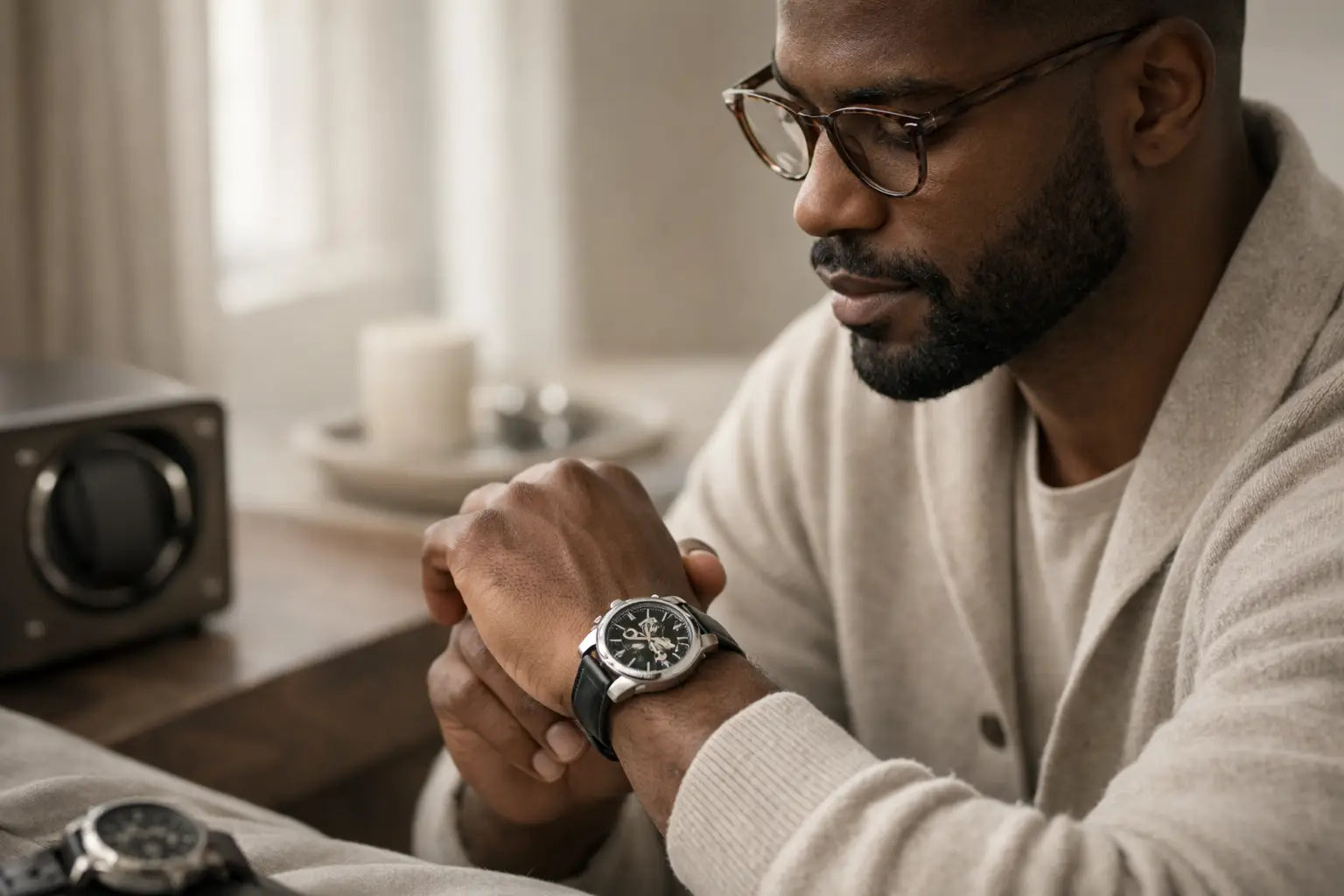
A rotation frame offers another register. It might be thinner, more geometric, more translucent, or slightly more relaxed. Owning more than one pair is not about constant reinvention. It is about having the right instrument for different conditions. The same principle applies to intentional timepieces: a refined collection is built around distinct roles, not accumulation for its own sake.
Prescription Readiness Should Be Part of the Decision
The best optical frames are designed with lenses in mind, not treated as empty fashion objects. Before committing to a silhouette, consider the prescription it will hold. Stronger prescriptions may benefit from a smaller lens shape, which can help manage edge thickness. Progressive lenses generally need enough vertical depth to provide a comfortable reading area. High wraps and very shallow lenses can introduce compromises depending on the prescription.
This does not mean technical needs eliminate personal taste. It means a good selection process accounts for both. Bring a current prescription to the fitting conversation and be candid about daily habits. Someone who moves between laptop work and driving has different priorities from someone who reads extensively, works outdoors, or needs a frame that pairs comfortably with headphones.
NCMPRBL approaches optical frames as prescription-ready pieces, which is the appropriate standard for eyewear intended to live beyond occasional wear. For eligible purchases, FSA and HSA card acceptance can also make the practical side of choosing a well-made pair more straightforward.
Care Is Part of Ownership
Durability is not an abstract claim. It is maintained through small habits. Clean lenses with a microfiber cloth and a lens-safe solution rather than a shirt hem or paper towel. Store frames in a protective case when they are not being worn. Avoid leaving acetate in prolonged heat, such as a parked car, where warping and stress can occur.
A periodic adjustment is equally valuable. Temperature, use, and the natural asymmetry of the face can gradually alter fit. An optician can realign temples, refine nose-pad placement, and check screws before a minor issue becomes a broken hinge. Acetate can sometimes be re-polished; metal frames can be cleaned and reset. These are ordinary acts of care, and they are part of why material quality matters.
There is also a discipline to putting frames down with both hands and removing them by the temples rather than pulling one side forward. It sounds minor, but repeated handling has a cumulative effect on alignment.
The Value of Wearing One Pair Well
A lasting purchase is not defined by how cautiously it is used. Its value is revealed through use: the meetings attended, the books read, the journeys taken, the daily rituals it quietly accompanies. Well-made frames develop familiarity, not obsolescence.
Choose optical frames with enough character to feel personal and enough restraint to remain open to change. Then wear them often. The most convincing form of distinction is not a new look every week, but an object that has become unmistakably yours.