




Why Automatic Watches Suit Your Intentional Life
Automatic watches offer more than just a way to tell time—they invite you to consider what truly deserves your attention. Unlike digital devices that rely on screens and charging cables, automatic watches make time visible through your own movement, connecting you to the passage of each moment.
For those who appreciate quiet luxury, this distinction matters. An automatic watch doesn’t clamor for attention. Instead, it draws the eye through thoughtful design, refined finishing, and the daily ritual of setting it before you begin your day.
What Sets Automatic Watches Apart
Automatic watches are powered by mechanical movements that wind themselves as you move. Inside the case, a rotor spins with the motion of your wrist, storing energy in a mainspring. This energy is gradually released to advance the hands around the dial.
- Automatic vs. Quartz: Quartz watches use batteries and are prized for precision and convenience.
- Automatic vs. Manual: Manually wound watches require regular winding by hand. Automatic watches capture energy naturally as you wear them.
The appeal of automatic watches is both technical and emotional. The seconds hand typically sweeps smoothly, unlike the ticking of most quartz watches. On models with exhibition casebacks, the intricate movement is visible, showcasing gears, rotors, and bridges in motion.
Mechanical watches are not chosen for absolute accuracy—a smartphone will always be closer to atomic time. Instead, they are valued for their material presence, longevity, and the experience of wearing a finely crafted object that moves with you.
The Value of Intentional Accessories
The best accessories enhance your presence without explanation. An automatic watch supports your style in meetings, travel, or unexpected moments. It is understated but never anonymous.
- The right dial, case, bracelet, or strap can unify your look.
- Automatic watches anchor an outfit, expressing standards without demanding attention.
- They reward attention to lasting details—how the case fits under a cuff, how the lugs follow your wrist, and dial legibility in changing light.
Owning a mechanical watch introduces a small, meaningful ritual. If left unworn, it may need to be reset—an act that can serve as a mindful reset for the wearer, marking the start of a new day with intention.
How to Choose an Automatic Watch That Endures
- Prioritize Proportion: Case diameter, lug-to-lug length, thickness, and dial size all affect fit. Balance is key—choose dimensions that complement your wrist.
- Consider Versatility: A refined, versatile watch transitions easily between work, travel, and leisure. Look for clear indices, contrasting dials, and a profile that suits both formal and casual wear.
-
Material Matters:
- Stainless steel is adaptable and durable.
- Leather straps add warmth and formality.
- Metal bracelets offer structure and resilience.
- Dial Color: Black, silver, white, and blue are timeless and versatile. Earth tones and textured dials offer individuality. Choose bold colors only if they fit your personal style.
- Movement and Execution: Check power reserve, water resistance, and date display. The crown should operate smoothly, finishing should match the design, and the dial should be legible at a glance.
Understanding Power Reserve and Watch Rotation
Power reserve is the time a fully wound automatic watch will run without being worn. Most offer about two days, though some last longer. If you rotate watches, expect to reset the time when returning to one after a break—this is normal and part of the mechanical watch experience.
- Longer power reserves are useful for frequent travelers or collectors.
- A watch case can help organize and protect your collection between wears.
Water Resistance: A Practical Feature
Water resistance ratings should be respected. A daily-wear watch can handle ordinary exposure, but always check the manufacturer’s guidance before swimming or showering. Water, steam, and pressure can affect seals over time, so treat mechanical watches with care around moisture.
How to Wear an Automatic Watch Comfortably
- The watch should sit just above the wrist bone, secure but not tight.
- Bracelets should allow slight movement but not slide around the arm.
- Leather straps should feel settled, not constricting.
- Comfort is essential—it helps the watch become part of your daily routine.
- With a jacket, ensure the watch fits smoothly under the cuff; case thickness matters as much as diameter.
- Formality rules are flexible—a clean automatic on a bracelet works with a suit, while a leather strap can elevate casual looks. Choose coherence over flash.
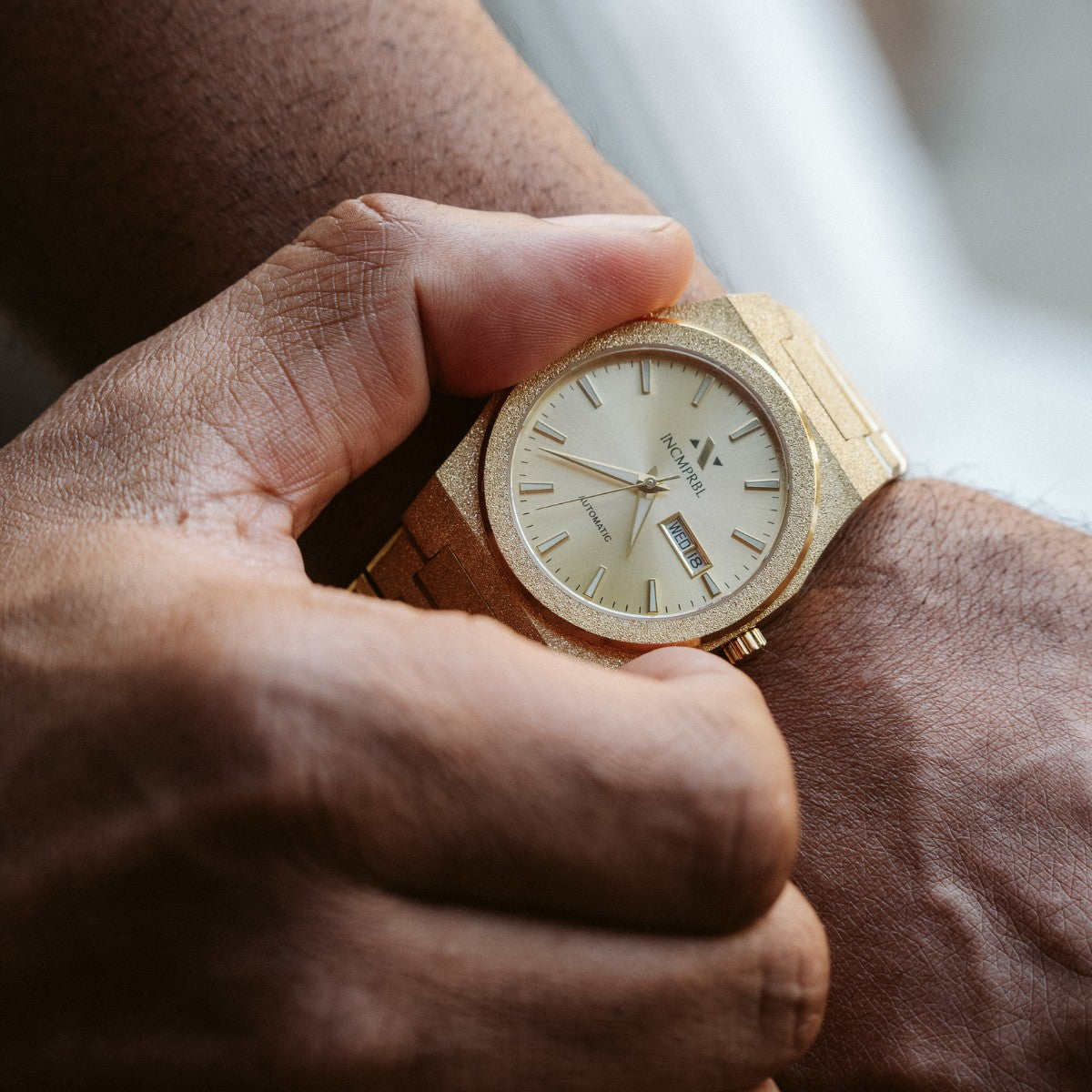
NCMPRBL’s Ascend Automatic collection embodies this philosophy: mechanical presence for a wardrobe built with purpose.
Care Tips for Automatic Watches
- Wind gently through the crown before setting the time, following your watch’s instructions.
- Avoid changing the date during late evening hours, as this can strain the mechanism.
- Keep the watch away from strong magnetic fields, which can affect accuracy.
- Avoid hard impacts—mechanical movements are designed for daily motion, not repeated shocks.
- Clean with a soft cloth. For water-resistant bracelet watches, use a lightly damp cloth if the crown is secured and the rating allows. Keep leather straps dry and let them rest between wears.
- Professional servicing is recommended every few years, or if you notice accuracy changes, reduced power reserve, moisture under the crystal, or resistance when operating the crown.
An automatic watch becomes more personal the longer you wear it. It doesn’t send notifications or require passwords—it simply keeps moving with you. Choose one that feels right from the start, and let it become part of your rhythm in 2026 and beyond.
Frequently Asked Questions
What is an automatic watch and how does it work?
An automatic watch is a mechanical timepiece that winds itself using the motion of your wrist. Inside, a rotor spins as you move, storing energy in a mainspring to power the watch without batteries.
How often should I wind or set my automatic watch?
If worn daily, your automatic watch will stay wound. If left unworn for more than a day or two, it may stop and need to be reset and wound before wearing again.
Is an automatic watch as accurate as a quartz or digital watch?
No, automatic watches are generally less precise than quartz or digital watches. They are valued for their craftsmanship, longevity, and tactile connection to time rather than atomic accuracy.
Can I swim or shower with my automatic watch?
Only if the watch’s water resistance rating specifically allows it. Always check the manufacturer’s guidance before exposing your watch to water, and avoid moisture if the watch is not rated for such use.
How do I care for my automatic watch?
Wind gently, avoid strong magnets and hard impacts, clean regularly with a soft cloth, and service professionally every few years or if you notice performance changes. Keep leather straps dry and rest them between wears.